
Your cart is currently empty!

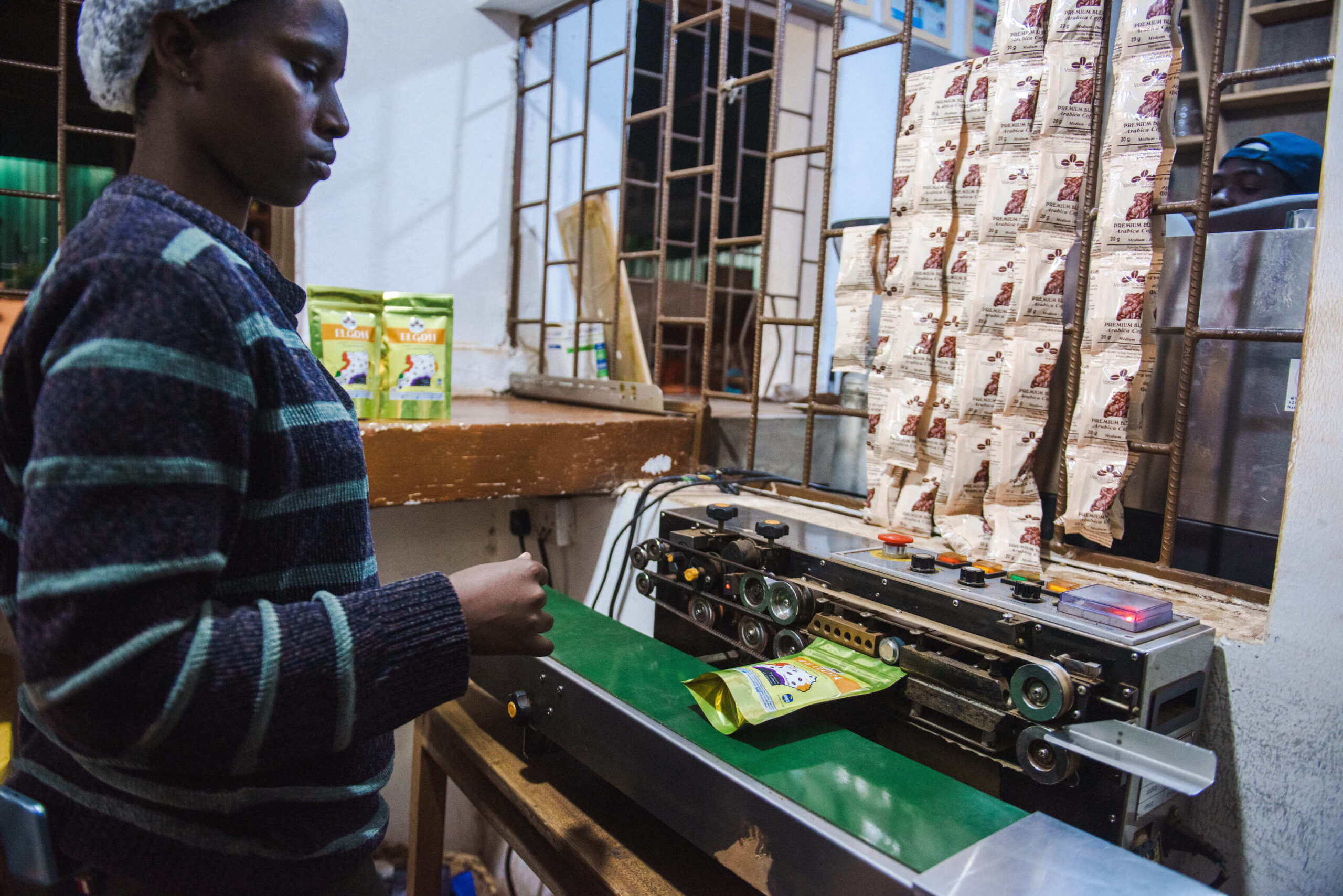
In Uganda, 2026/27 green coffee production is projected to rise 0.9% to 7.16 million bags as of June 2026, alongside a structural policy shift integrating sector regulation into the national agricultural ministry.
The Impact is classified as marginal, representing an increment of approximately 61,000 bags that remains statistically insignificant against a projected 10 million bag global forward surplus.
Escalating global fertiliser costs and endemic biological threats present a clear, binding risk to target realisation among undercapitalised smallholder producers.
Market Context
Ugandan coffee production is forecast to reach 7.16 million 60-kilogram bags for the 2026/27 marketing year, comprising 6.025 million bags of robusta and 1.135 million bags of arabica. Total planted area is expanding from 590,000 to 595,000 hectares, driven by land conversion from timber in the Masaka region. Concurrently, new legislation has fundamentally restructured sector governance.
Policy: Sector regulation, quality control, and export promotion have been transferred to the Ministry of Agriculture, Animal Industry and Fisheries. The state is prioritising local processing capacity, though green coffee export bans have been ruled out in the near term. Operations: Production remains highly fragmented, with smallholders farming 0.5 to 2.5 hectares accounting for 90% of national output. Yields face systemic friction from low agrochemical application rates and persistent biological threats. Trade: Green coffee constitutes over 98% of outgoing volumes. Total 2026/27 exports are forecast at 6.83 million bags. The European Union absorbs 73% of this volume, while non-reporting destinations alongside emerging markets like Morocco and China are incrementally expanding their market share.
Historically, Uganda has maintained steady volume growth, yet its total output remains dwarfed by primary robusta origins like Vietnam, which is projecting an exportable volume approaching 30.8 million bags for the comparable period.
Market Analysis
This projected 0.9% production increase does not materially alter the global robusta balance sheet, as the absolute volume gain is entirely eclipsed by the structurally bearish 10 million bag global supply surplus currently entering the market.
The structural feasibility of Uganda’s yield and planted-area expansion targets is highly vulnerable to global input cost inflation. Global fertiliser prices are projected to rise 31% in 2026, with urea reaching 750 USD per tonne. Given that 90% of Uganda’s production relies on smallholders with limited capital liquidity, the rising cost of common nitrogen- and phosphorus-based inputs severely deteriorates the input-to-output affordability ratio. Although local export prices rose to 4.64 USD per kilogram in 2024/25 before settling near 4.51 USD in 2025/26, these farmgate revenue gains are rapidly eroded by compounding agronomic costs. Furthermore, the integration of the primary coffee authority into a broader ministry introduces short-term administrative friction, threatening the continuity of essential extension services required to mitigate endemic leaf rust and borer outbreaks.
Rising agro chemical costs and structural pest prevalence constitute binding operational constraints on the 5,000-hectare expansion translating into linear yield growth.
Outlook
Smallholder fertiliser procurement rates ahead of the next major fruit-setting window will dictate the structural viability of the 7.16 million bag target. With global urea prices accelerating by 31% year-on-year, reduced application rates among the 90% smallholder majority will mechanically suppress cherry development and exacerbate vulnerability to existing pest pressures, effectively capping total recoverable yield despite the net increase in planted hectares.
Leave a Reply